You’re staring at a visa checklist that says “proof of onward travel,” and right below it, in bold, the consulate warns you not to buy a non-refundable flight before your visa is approved. It feels like a trap, and you’re not wrong to be confused. A dummy flight ticket for visa applications exists to solve exactly this problem, and getting it right matters more than most applicants realize.
What Is a Dummy Flight Ticket for Visa Applications?
A dummy flight ticket for visa purposes isn’t a fake document. It’s a flight reservation, sometimes called a flight itinerary or “reservation booking designator” (RBD), that shows a real airline, real flight numbers, real dates, and your name exactly as it appears on your passport. What it doesn’t include is a completed purchase. Airlines and travel agents can generate a valid, verifiable reservation code that holds a seat temporarily, often for 24 to 48 hours, without you paying full fare for a ticket you might never use.
Consulates ask for this because they need evidence of your intended travel dates and your return, not proof that you’ve spent hundreds of dollars on a ticket you can’t get refunded if the visa is denied. The European Commission’s own guidance on applying for a Schengen visa lists a travel itinerary among the required supporting documents, without demanding a fully paid ticket. The important distinction is this: the reservation has to reflect your actual travel plans. Booking a placeholder flight for dates you don’t intend to fly, or routing through a city you have no plan to visit, crosses from “reasonable proof” into misrepresentation, and that’s a real risk to your application.
Which Visa Types Actually Require Proof of a Flight Reservation
Not every visa application asks for this document, and the ones that do vary in how strictly they enforce it. For a Schengen Type C visa, the short-stay visa covering tourism, business, or family visits up to 90 days within any 180-day period, most consulates want a round-trip flight reservation as part of the packet, alongside proof of accommodation and travel medical insurance with at least €30,000 in coverage. If you’re applying for a Schengen Type D national visa for a stay longer than 90 days, requirements are set by the individual country and can differ significantly, so check with that specific consulate.
US B-1/B-2 visitor visa applicants generally aren’t required to show a flight booking at the interview stage, since the consular officer is assessing ties to your home country more than the itinerary itself, but having one ready doesn’t hurt. UK Standard Visitor visa applications typically expect a travel itinerary that includes intended flight dates. If you’re a US or EU citizen traveling visa-free to countries that only require an entry authorization rather than a visa, the flight reservation question looks different again, since ESTA for the United States and the still-pending ETIAS for Europe are not visas and don’t carry the same document checklist.
Here’s the thing worth repeating: a flight reservation is one piece of a larger packet. Consulates are comparing it against your hotel booking, your day-by-day plan, and your financial documents to see whether the whole story holds together.
How to Get a Free Dummy Flight Ticket for Visa Application Packets
Getting a legitimate reservation doesn’t have to cost anything if you know where to look. Several dedicated services and some airline booking engines let you hold a reservation without payment for a short window, which is enough time to submit your visa application and then either confirm the actual flight or let the hold expire.
- Decide your real dates first. Base the reservation on the departure and return dates you actually intend to travel, matching the trip length your visa type allows.
- Use an airline’s own “hold my fare” option where available. Some carriers let you reserve a specific flight for 24 to 72 hours before payment is due, which produces a genuine airline booking reference.
- Or generate a verifiable flight reservation through a dedicated service. These produce a real PNR (passenger name record) you can check on the airline’s own website, which is what most visa officers look for.
- Match every name to your passport exactly. A misspelled name is one of the most common reasons a reservation gets flagged during document review.
- Build it into your full itinerary, not just the flight. A one-page flight confirmation sitting alone looks thin. Pairing it with a day-by-day travel plan gives the consulate a complete picture of your trip.
For that last step, TravelDocGenerator’s Get Premium travel itinerary generator for visa applications puts your flight dates, hotel stays, and daily plans into the format consulates expect to see, built around the trip you’re actually taking rather than a placeholder.
What to Avoid: Fabricated Tickets and Consulate Red Flags
There’s a difference between a temporary reservation and a document designed to deceive, and consulates know it. Never submit a flight confirmation for a route or dates you have no intention of flying just because it looks more “convincing.” Visa officers cross-reference flight details against other parts of your application, and a reservation that doesn’t match your stated travel dates, your insurance coverage period, or your accommodation booking is a fast way to trigger a request for additional documents, or an outright refusal.
Some applicants also worry that a reservation without a paid ticket looks suspicious on its own. It doesn’t, as long as it’s consistent with the rest of your file. The European Commission’s page on applying for a Schengen visa treats the itinerary as one required document among several, not the deciding factor. What consulates are actually screening for is coherence: does your flight reservation, hotel proof, cover letter, and financial documentation all describe the same trip, taken by the same person, for the reasons stated on the form.
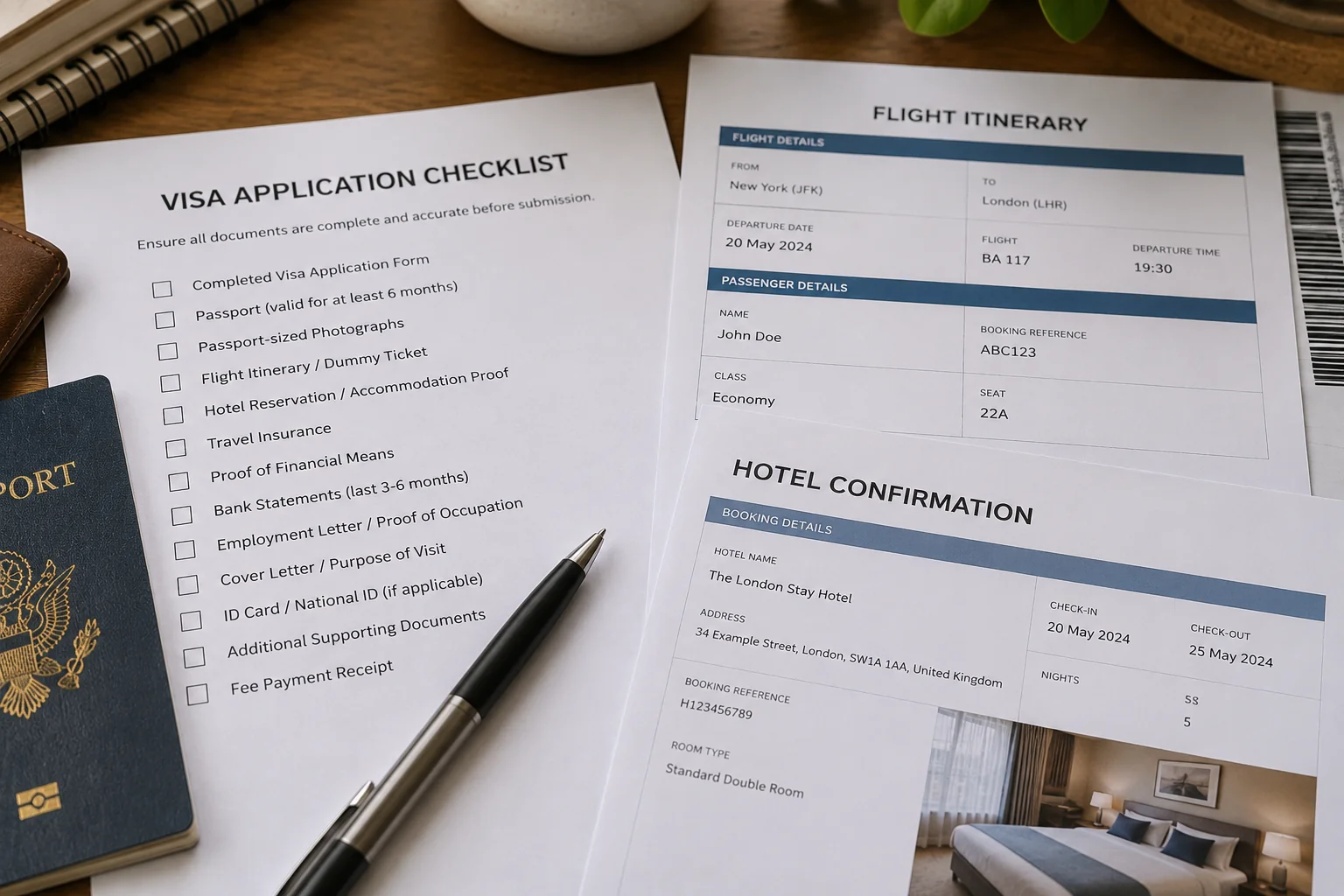
If your consulate specifically requires a fully paid, non-refundable ticket, that instruction overrides general guidance. It’s less common, but it happens, particularly for certain long-stay national visas. Always check the exact wording on your specific consulate’s website before assuming a reservation will be accepted.
Building the Rest of Your Visa Document Packet
A flight reservation rarely travels alone. Most Schengen and UK Standard Visitor applications also expect proof of accommodation for every night of your trip, whether that’s a hotel booking, a confirmed Airbnb reservation, or an invitation letter if you’re staying with family. TravelDocGenerator’s hotel booking proof generator creates that documentation from your actual reservation details, formatted the way consulates expect to receive it.
If you’re traveling to Europe from the US, this is also the moment to check where things stand with entry systems, since they’ve been shifting. The Entry/Exit System (EES), the EU’s biometric check-in process at the external borders of the 29 participating European countries, launched on 12 October 2025 and has been fully operational across all 29 countries since 10 April 2026, so expect fingerprint and photo capture at the border regardless of your visa status. ETIAS, the separate €20 travel authorization for visa-exempt travelers (valid three years or until your passport expires, whichever comes first), is a different story. eu-LISA’s official page still lists the last quarter of 2026 as the target, but independent reporting through mid-2026 points to a further slip into 2027, tied to the technical strain EES has put on border queues. ETIAS is not a visa, so it won’t affect your Schengen visa document checklist, but check eu-LISA’s official ETIAS page for the current timeline before you travel, since this date has moved more than once.
One more document worth having ready: your passport itself needs to be issued within the last 10 years and valid at least three months beyond your planned departure date from the Schengen area. It’s a small detail that trips up more applicants than you’d expect.
Get Your Documents Ready Without the Guesswork
Assembling a dummy flight ticket for visa applications is really about getting one part of a larger, coherent story right. The reservation needs to be real, verifiable, and honest about the trip you’re actually planning, not a placeholder disconnected from the rest of your application. Pair it with accurate accommodation proof, a day-by-day plan, and the right visa type for your circumstances, and you’ve removed one of the more stressful unknowns from the process.
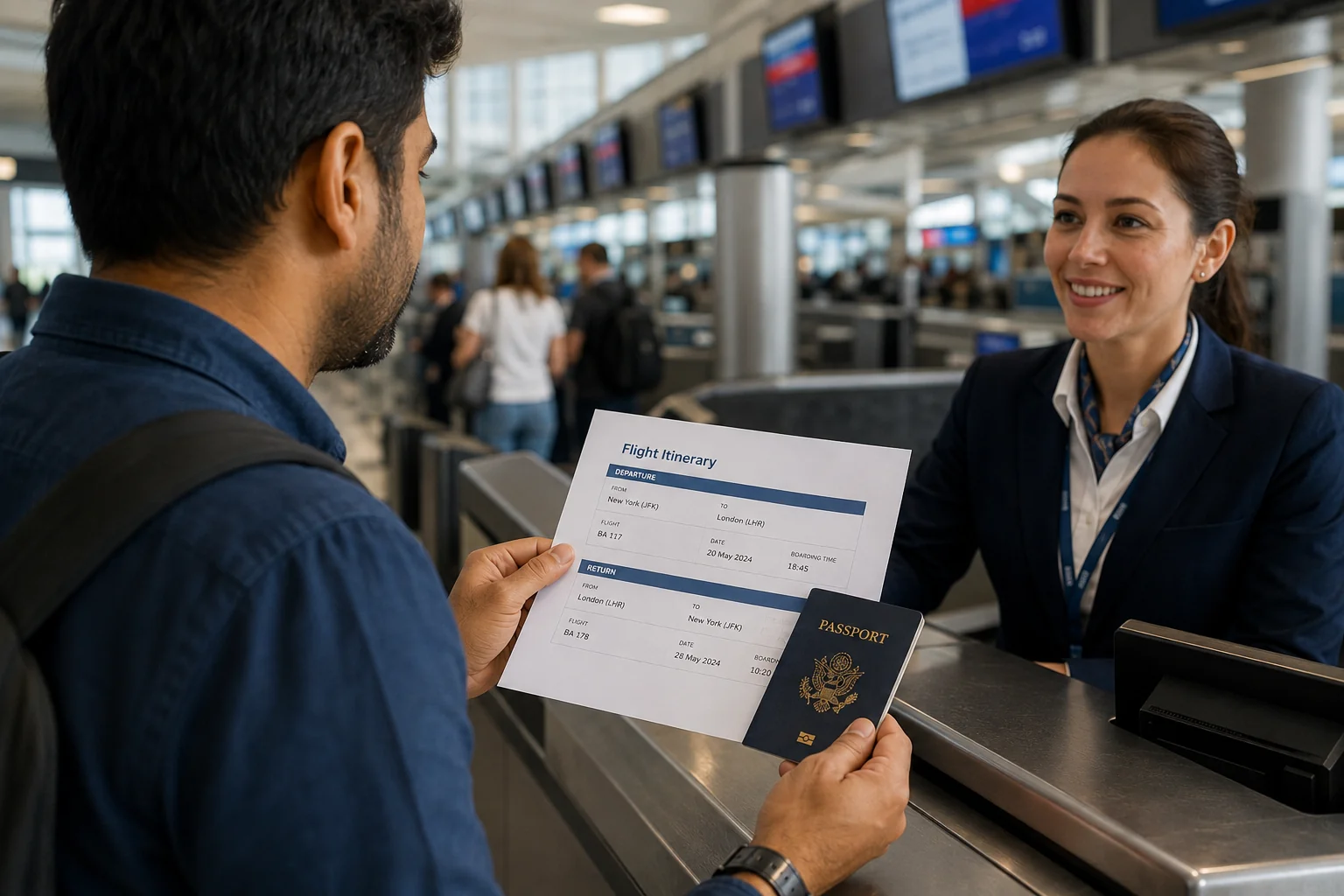
If you haven’t built out the rest of your travel plan yet, TravelDocGenerator’s travel itinerary generator for visa applications turns your flight dates and accommodation into the structured, consulate-ready document you’ll submit alongside your reservation. It takes a few minutes, it’s free to try, and it’s built specifically for people in exactly your situation right now. Before you submit anything, double check your specific consulate’s current document list on its official site. Requirements shift, and the ten minutes it takes to confirm them is worth it against the weeks you’d lose to a delay.
Ready to prepare your visa documents?
Generate itineraries, hotel booking proofs, passport photos and more in minutes - free.