Staring at the UK’s visa application portal at midnight, wondering if you’ve forgotten a document that will sink your whole application, is a specific kind of stress. You’ve probably already read three different blog posts that all say something slightly different about how much money you need in the bank or how long you’ll wait for a decision. This guide walks through the actual UK Standard Visitor visa requirements, using the current fees and processing patterns, so you can build a checklist you trust.
Who Needs a UK Standard Visitor Visa (and Who Just Needs an ETA)
Here’s the thing that trips up a lot of applicants first: not everyone visiting the UK needs a visa at all. If you hold a US passport or a passport from an EU member state, you’re generally visa-exempt for short tourist, family, or business visits — but since 25 February 2026, you do need a UK Electronic Travel Authorisation (ETA) before you travel. The ETA is not a visa; it’s a digital permission to board your flight, costing £20 (raised from £16 on 8 April 2026) and valid for multiple trips over two years or until your passport expires, whichever comes first.
The Standard Visitor visa is for a different group: nationals of countries that the UK does not treat as visa-exempt, who need permission in advance to enter for tourism, visiting family, business meetings, or short courses of study. If you’re a citizen of India, Nigeria, China, or dozens of other countries and you currently live in the US or an EU country — on a work visa, as a student, or as a green card or residence permit holder — you’ll typically still apply for the Standard Visitor visa through the visa application center covering your city of residence, not your citizenship. That’s an important distinction, because the UK is not part of the Schengen area, so the EU’s Entry/Exit System (EES) and ETIAS authorisation don’t apply to UK travel at all — they only matter if your itinerary also includes Schengen countries like France, Germany, or Spain.
UK Standard Visitor Visa Requirements: Documents You Need to Gather
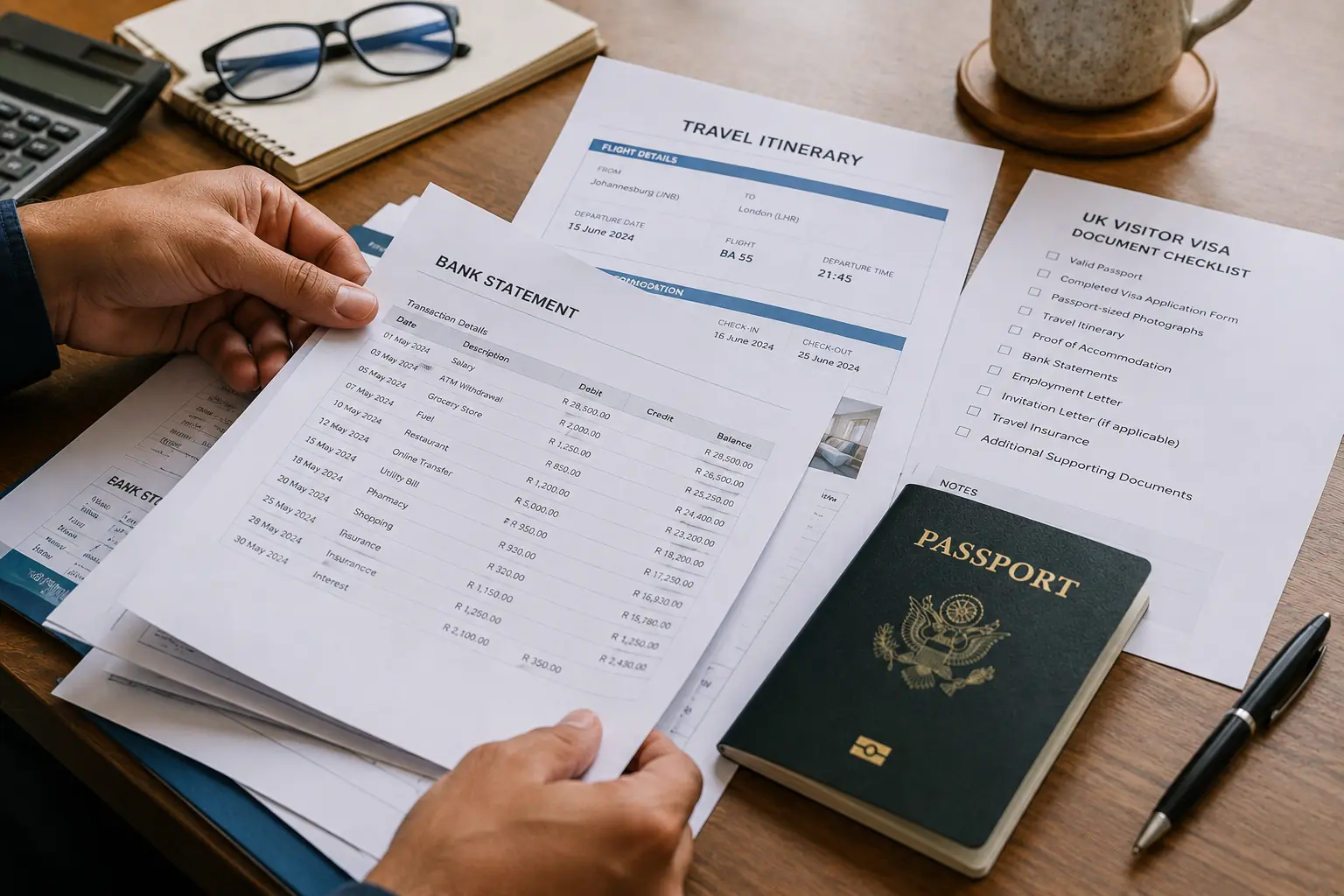
Once you’ve confirmed you actually need the visa rather than an ETA, the UK Standard Visitor visa requirements come down to proving three things: who you are, that you can afford the trip, and that you intend to leave when your visit is over. UK Visas and Immigration doesn’t publish a single fixed checklist for every applicant, and your caseworker will weigh your documents together rather than ticking boxes, but the categories below are what every complete application needs.
| Document | What it should show |
|---|---|
| Valid passport | At least one blank page and validity covering your whole visit; a passport nearing expiry can raise questions even though the visa itself doesn’t require years of remaining validity like Schengen does |
| Completed online application | Submitted through the gov.uk visa application system before your appointment |
| Digital photo | Meets the UK’s photo specifications; uploaded as part of the online form |
| Proof of funds | Recent bank statements or payslips showing you can cover accommodation, living costs, and your return journey without working or claiming public funds |
| Proof of accommodation | A hotel booking, or an invitation letter from a UK-based host including their address and immigration status |
| Travel itinerary | Flight details and a day-by-day outline of your visit |
| Evidence of ties to home | Employment letter, enrollment letter, or property documents showing a reason to return |
| Biometric enrollment | Fingerprints and a photo taken at your local visa application center |
Two of these are where applicants most often stumble. The accommodation piece is worth planning early: a confirmed hotel booking for your full trip works cleanly, and if a friend or family member is hosting you, their letter needs to match the dates on your itinerary exactly. A hotel booking proof generator can help you put together accommodation documentation that reflects a booking you’ve actually made, in the format a caseworker expects to see.
The itinerary is the other place where vague answers hurt you. “Visiting the UK for two weeks” tells a caseworker nothing about your actual plans and can read as a sign you haven’t thought the trip through. A day-by-day travel itinerary generator for visa applications lets you lay out where you’ll be and when, matched to your flights and accommodation, which is exactly what UK Visas and Immigration wants to see alongside your funds and ties documentation.
UK Standard Visitor Visa Fees and How Long Processing Takes
Fees for the UK Standard Visitor visa changed on 8 April 2026. As of that date, a six-month visa costs £135, a two-year visa £506, a five-year visa £903, and a ten-year visa £1,128. If you want your decision faster, priority service adds roughly £500 and super priority adds roughly £1,000 on top of the standard fee, where those services are offered in your country. Because Home Office fees are reviewed periodically and have risen before, confirm the exact current amount on the official Home Office visa fees calculator before you pay — never rely on a blog post, including this one, for the figure you actually submit.
Processing times follow a similar pattern of change. The standard target most applicants see is a decision within three weeks (about 15 working days) of attending their biometric appointment, if applying from outside the UK. That’s a target, not a guarantee — the Home Office’s own published service standards note it aims to decide 90% of non-settlement applications within three weeks, 98% within six weeks, and all of them within twelve. Applying during a busy season, such as the run-up to summer travel or major UK holidays, can push you toward the slower end of that range, so build in a buffer rather than booking non-refundable flights for the day after your appointment.
Processing windows shift by country and by season. Always check the current estimate for your specific visa application center on the official gov.uk visa processing times page rather than assuming the average applies to you.
How to Apply for a UK Standard Visitor Visa From the US or EU
If you’re applying from the US or an EU country, the mechanics of the process are the same regardless of your nationality — only the visa application center location changes.
- Complete the online application on gov.uk, answering questions about your visit, funds, and background honestly and in detail.
- Pay the visa fee that matches the validity length you’re requesting.
- Book a biometric appointment at the visa application center covering your city — for US applicants that means centers in cities like New York, Washington D.C., Chicago, or San Francisco; EU applicants typically use a center in their country of residence.
- Gather your supporting documents: passport, proof of funds, accommodation evidence, itinerary, and any invitation or cover letter from your UK host or business contact.
- Attend your appointment to give fingerprints and a photo, and submit your original documents if requested.
- Track your application status online and wait for your passport and decision letter to be returned, usually by courier.
If your trip involves a UK business meeting or a formal invitation from a relative, a clearly formatted cover or invitation letter carries real weight with a caseworker. A cover letter generator can help you or your UK host produce a letter with the right structure and detail — dates, purpose, relationship, and contact information — reflecting the actual visit you’re planning, not a fabricated one. UK Visas and Immigration can and does refuse applications over documents that look inconsistent or invented, so every letter and booking you submit should match your real plans down to the dates.
Ready to Put Your UK Standard Visitor Visa Application Together?
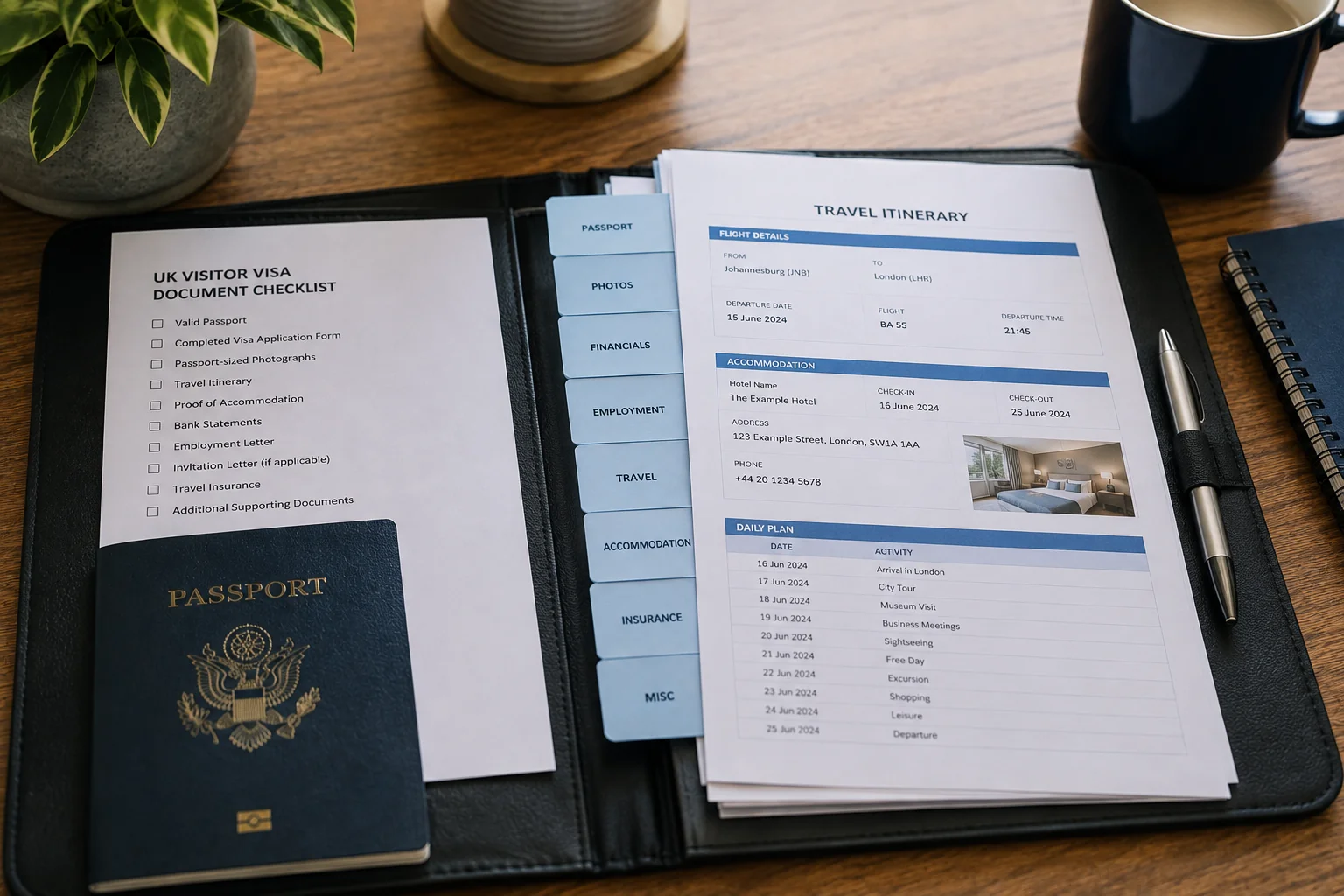
By now the UK Standard Visitor visa requirements probably feel less like a mystery and more like a checklist: passport, funds, accommodation, itinerary, and evidence you’ll go home. The one piece that trips up otherwise strong applications is a vague or inconsistent itinerary — caseworkers read hundreds of these a week, and a day-by-day plan that lines up cleanly with your flights and accommodation stands out for the right reasons. Start with a travel itinerary generator for visa applications to build that plan around your actual trip, then use it alongside your bank statements and accommodation proof to put together an application you can submit with confidence. Whatever you do, double-check the fee and processing time you’re working from against the official gov.uk pages before you pay or book anything non-refundable — this is a process where the last thing you want is a surprise.
Ready to prepare your visa documents?
Generate itineraries, hotel booking proofs, passport photos and more in minutes - free.